SPECIAL EDITION November Newsletter |
|
|
In this special edition, we’re sharing news on AFN’s new program structure, 2026 membership renewals, an open call for Steering Committee nominations, 2026 Gathering announcements, and a glance at our Narrative Change Report - all along with our regular network news and highlights. | |
|
Over the past year, AFN has developed a new program structure to make engagement easier and more effective for our members. We are thrilled to be able to share those programs with you here and in an all-network new programs rollout meeting on December 8 at 2pm EST! We encourage you and your colleagues to attend this meeting for a deep diver into what’s on the docket for the coming year, but here’s a look at what’s to come: |
COMMUNITIES OF PRACTICE → |
Sign Up for a Community of Practice
What is a Learning Journey?
Learning Journeys (LJs) are structured, cohort-based learning experiences centered and laser focused on specific topics. They are designed with a clear beginning, middle, and end. What Learning Journeys are ongoing? |
-
In Appalachia: Medicaid Cuts (wrapping November 20) → This session offered Appalachian funders a grounded look at the ripple effects of recent Medicaid cuts and what they meant for families, providers, and the region’s already-strained care infrastructure. We explored how reduced coverage impacted rural hospitals, behavioral health services, early childhood systems, and community health overall, and highlighted ways funders coordinated, adapted, and showed up with community-aligned support during a moment of profound transition.
- Our next meeting will coincide with the already scheduled Health Group meeting. If you are an existing Health Group member, please join for a download!
-
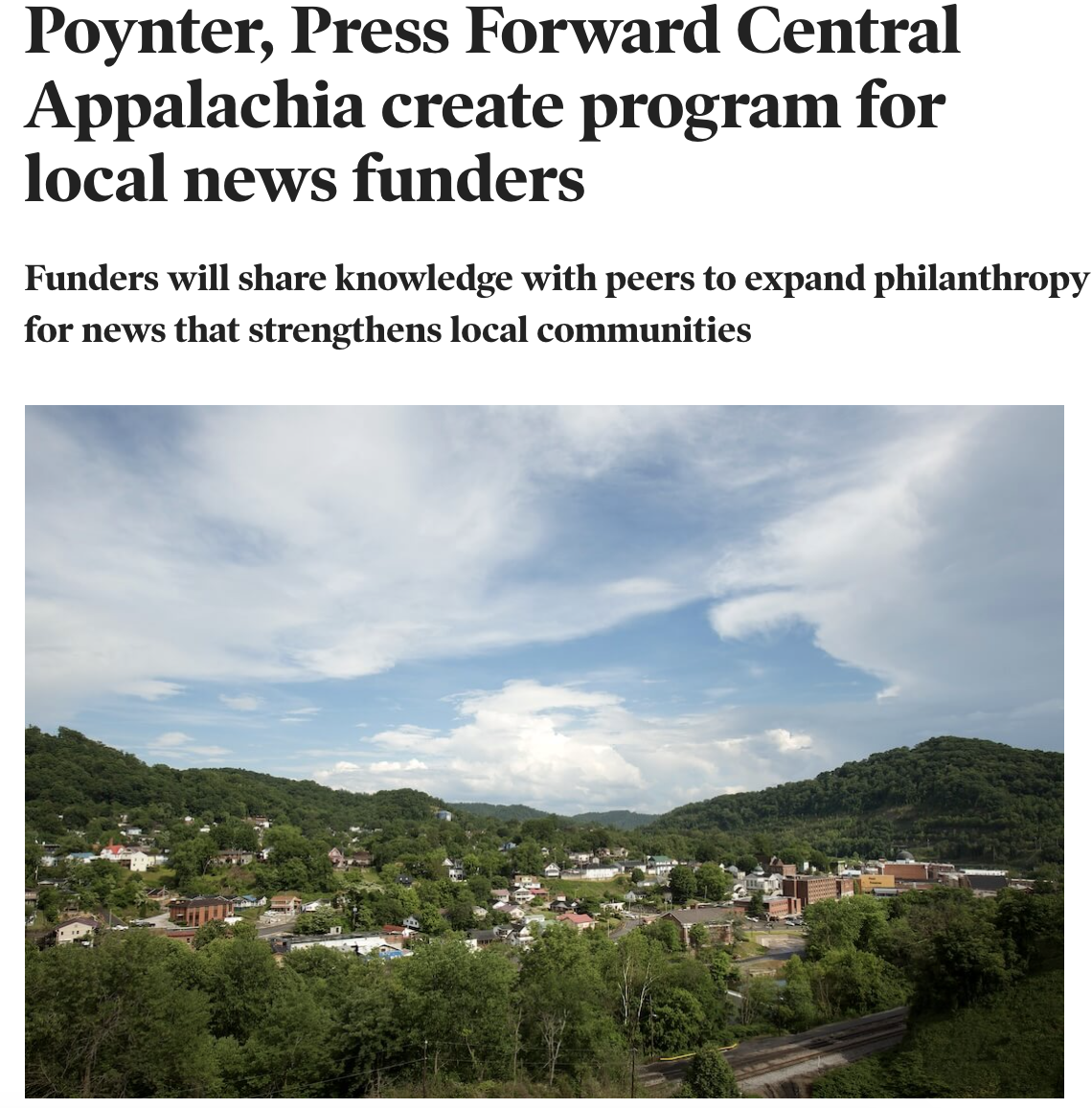
Press Forward Central Appalachia + Poynter (kicked off November 13 and ongoing until April 2026)→ Sign ups for this Learning Journey are now closed, but stay tuned to hear about what insights will be uncovered, and the ways we will learn together on this journey. If you are curious about this programming, please check out the joint press release from Poynter and AFN linked in the AFN in the News section, as well as here for ease.
|
What Learning Journeys will kick off in 2026? -
The Art of Every Day Civics → For funders looking to develop or deepen their Appalachia-based community support approach, this learning journey examines how citizens strengthen community life through arts and culture-driven actions. By engaging with selected local, regional, and national civic changemakers, the series will examine the role of artists as civic leaders working toward thriving communities in a healthy democracy. The series will allow participants to explore the complex role that artists, arts, and culture play in civic infrastructure-building processes and shed light on selected projects and pathways to support and elevate Appalachia-based changemakers. This Learning Journey is being developed in thanks to support from the Educational Foundation of America. Sign up to join here (dates TBD)
-
Funding for the Moment We Are In: Trust based practices and mutual aid → Designed for Appalachian funders navigating a rapidly shifting landscape, this session digs into approaches rooted in relationships, flexibility, and shared care. We’ll explore how trust-based philanthropy, mutual aid models, and community-driven decision making can move resources quickly and equitably—aligning funding with what communities actually need right now.
- Appalachia 101 → A grounded primer for Appalachian funders seeking a deeper, more nuanced understanding of the region they serve. We’ll walk through the histories, cultures, economies, tensions, and transitions that shape today’s Appalachian realities—and how funders can support communities with greater context, humility, and impact.
|
How to join?
While we have two LJs ongoing and one of those about to wrap, you can express interest for the upcoming The Art of Everyday Civics LJ by clicking here. Information for other slated LJs is forthcoming.
Please note: Learning Journeys are open to all members, **with some offering optional at-cost participation. Non-members may join for an additional fee. **Members may also sponsor Learning Journeys to make them more widely accessible to the network. |
What is an Action Team?
Action Teams are collaborative, action and solution oriented, and nimble teams focused on producing concrete outcomes, like a playbook, new fund, or solutions to regional challenges. When we think back to the successful work and initiatives born out of AFN (such as the Downtown Revitalization Playbook, Stories of the Power of Art, and major initiatives that would go on to become organizations like Invest Appalachia and Just Transition Fund). In essence, we are giving a name, and a designated space, for a structure that already has proof of concept!
What Action Teams will AFN offer? |
-
Appalachian Helene Response Fund → The Appalachian Helene Response Fund is led by a committee of Appalachian funders who coordinate resources, guide strategy, and respond directly to the ongoing impacts of Hurricane Helene. Together, they center long-term recovery, stabilizing essential services, strengthening community-led efforts, and ensuring resources reach the places most deeply affected. As funders work collectively, this initiative is also laying the groundwork for systems-level interventions that will strengthen regional resilience and improve how Appalachia responds to future crises.
-
Rural News Fund → The Rural News Fund is driven by a Coordinating Committee of funders committed to rebuilding and strengthening the region’s news and information infrastructure through creative capital, technical assistance, cohort learning, and network building. Through coordinated investment and shared decision-making, the fund supports newsroom sustainability, addresses news deserts, and expands community-driven storytelling across Central Appalachia. This collaborative effort not only uplifts local outlets today. It is also shaping what work needs to happen next to secure a stronger, more reliable information ecosystem for the region’s future.
|
How to join?
Contact Jess to join an ongoing Action Team or to catch up on the work happening within them. Keep in mind that while all Action Teams are free to join, they require regular participation and a shared commitment to the team’s deliverable. To start a new Action Team, a member sponsor is needed (though not all participants must be sponsors). |
|
|
You can check out what these new programs entail and follow along with what's to come by clicking the button below and registering to attend our 12/08 Programs Rollout. |
Do YOU have ideas about future programming? Click here to let us know about them today! |
Are you part of a member organization and interested in joining our Steering Committee? Nominations are now open until December 1st. |
Please complete the self-nomination form linked above to be considered for this year’s slate of candidates. We anticipate 1–2 openings on the Committee this year, with the possibility of up to 4 seats. If you have any questions about the nomination or process, please reach out to Kalista Pepper. |
|
|
Looking back, 2025 handed our region no shortage of challenges. Because of your leadership and collaboration, it became a year of real momentum for the Network. You can see some highlights in our “2025 Year in Review." Our members are the Network, and your work is what drives us toward a Just Transition in Appalachia. Invoices for 2026 membership went out in November. If you have questions or have not yet received yours, please contact Kalista Pepper. Thank you for standing with us and for the commitment you bring to Appalachia, year after year. If you’re not yet a member and are considering joining us in 2026, you can complete our membership application form and we’ll be in touch! |
|
|
AFN’s 2026 Gathering will take place in Ashland, Kentucky! This year’s theme is Forging Forward: Fortitude, Renewal, and Hope in Appalachia.
Our 2026 Call for Participation will open tomorrow, November 18th and will close on January 28th. Check it out at the link below → |
|
|
Narrative Change Pilot Project Report |
AFN concluded its Narrative Change Pilot Project Learning and Evaluation Report in November, marking the culmination of a $500,000 Ford Foundation initiative launched in 2023. The findings underscored two truths: narrative change requires deep, patient investment - and Appalachia is increasingly ready to lead that work.
One of our greatest takeaways is captured well in the report:
“Long-term success in narrative change requires sustained funding, strategic planning, and knowledge-sharing. Lasting impact depends on investments in systems, networks, and long-term strategies—not just one-off content projects. Narrative change is infrastructure work.”
—TGKVF, p.16
Read more about the project and its findings by clicking the link below! |
|
|
Join us on the first Friday of every month at 10 AM EST for our network-wide Hurricane Helene Response Call. This is a space for sharing updates, ideas, and organizing around Helene Recovery and Community Resilience. Use the button below to register and add the call to your calendar. We look forward to building with you. |
|
|
| Appalachia Digital Accelerator Successes
|
When Connect Humanity launched the Appalachia Digital Accelerator, they set out to change how broadband planning is done. Rather than be led by outside consultants, the program was designed to put communities in the driver’s seat: equipping local leaders with the tools and support they need to lead and sustain this work.
Thanks to the Appalachian Regional Commision, and additional funding from Truist, Ford, and Duke Energy Foundations, the Accelerator has now worked with teams across 11 Appalachian states to develop 48 broadband connectivity plans covering 71 communities. Read more about the program here. |
|
|
|
Awarded 35 one-year project grants for their Appalachian Futurism: Creative Liberation Fund in 2025! |
In 2025 the Waymakers Collective awarded 35 one-year project grants to individual artists, organizations, and/ or cultural workers in the Central Appalachian region — totaling $175,000 — as part of their second round of our Appalachian Futurism: Creative Liberation Fund! We can’t wait to see what they create. Read more here. |
|
|
| Mary Reynolds Babcock Foundation |
Article | Beyond 5%: The Mary Reynolds Babcock Investment in Racial Equity |
As a 72-year-old family foundation with approximately $170 million in endowment assets, they have consistently extended their spending beyond the traditional 5% payout rule. For the past two decades, their approach has reflected a deliberate commitment to increase resources in the South—boldly and consistently—in the face of systemic harm. Read more here.
|
|
| | Grant / Loan Opportunity! |
Southeast Kentucky Economic Development Corporation and Appalachian Community Capital have a new program to provide child care center owners in the Appalachian Regional Commission Distressed Counties with funding for new playground equipment. This program is a 50% grant and 50% low interest loan. Apply by October 30!
If you have questions about eligible counties, etc., please email Amanda Kelly amanda@skedcorp.com. Find more information here. |
|
|
|
The Community Heart & Soul Seed Grant Program provides $10K in funding for resident-driven groups in small cities and towns to start the Community Heart & Soul model. Grant funding requires a $10k cash match from the participating municipality or a partnering organization. Find more information here. |
|
|
|
Check out the Athens County Foundation’s full list of opportunities here. |
|
| |
WNC Bridge Foundation recognizes there are many WNC non-profit organizations whose good works have limited options to turn to for quick funding decisions. NOW Grants address this gap in our region. Through this program, WNC Bridge will award grants of up to $7,500. The application process is low-stress and simple, with a quick turnaround time for funding decisions. Find more information here. |
|
|
If you have news, an opportunity, grant, or webinar you would like for AFN to share in its next newsletter, please submit it here and contact Kalista Pepper at kalista@appalachiafunders.org with any questions. | |
|
|
Poynter is partnering with Press Forward Central Appalachia, a project of the Appalachia Funders Network, which is working to strengthen local news industries and support community and business ecosystems throughout the region. The free, six-month course will include sessions on what is working in local news funding, how to build trusted partnerships with newsrooms, communicating with stakeholders – including foundation boards – about the work, how to measure impact, and more.
The Central Appalachia course is the first Poynter cohort for funders at multiple levels of engagement with news, journalism and media funding; the program will expand to other regions in 2026. |
|
|
|
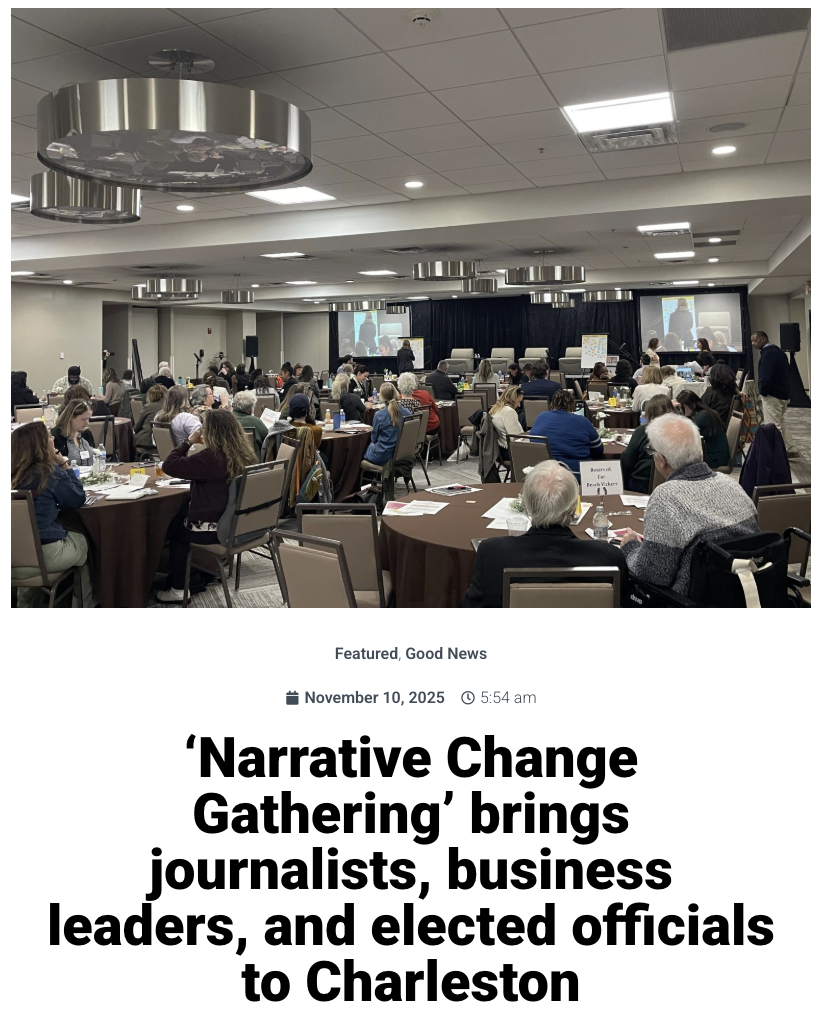
he Greater Kanawha Valley Foundation (GKVF), on Friday, held their “Narrative Change Gathering” at the Four Points by Sheraton, in downtown Charleston. The event provided an opportunity for journalists, non-profits, business leaders, and community members to network, participate in workshops, and hear creative ideas from top media performers.
Attendees included publisher Crystal Good of Black By God: The West Virginian, Kate Long with the Voices of West Virginia Project, Trey Kay from WV Public Broadcasting, Kanawha County Commissioner Natalie Tennant, reporter Erin Beck with the Mountain State Spotlight, and many others. Visual artist Ian Bode was also in attendance, and created a drawing of a live, illustrated record of the gathering. |
|
|
|
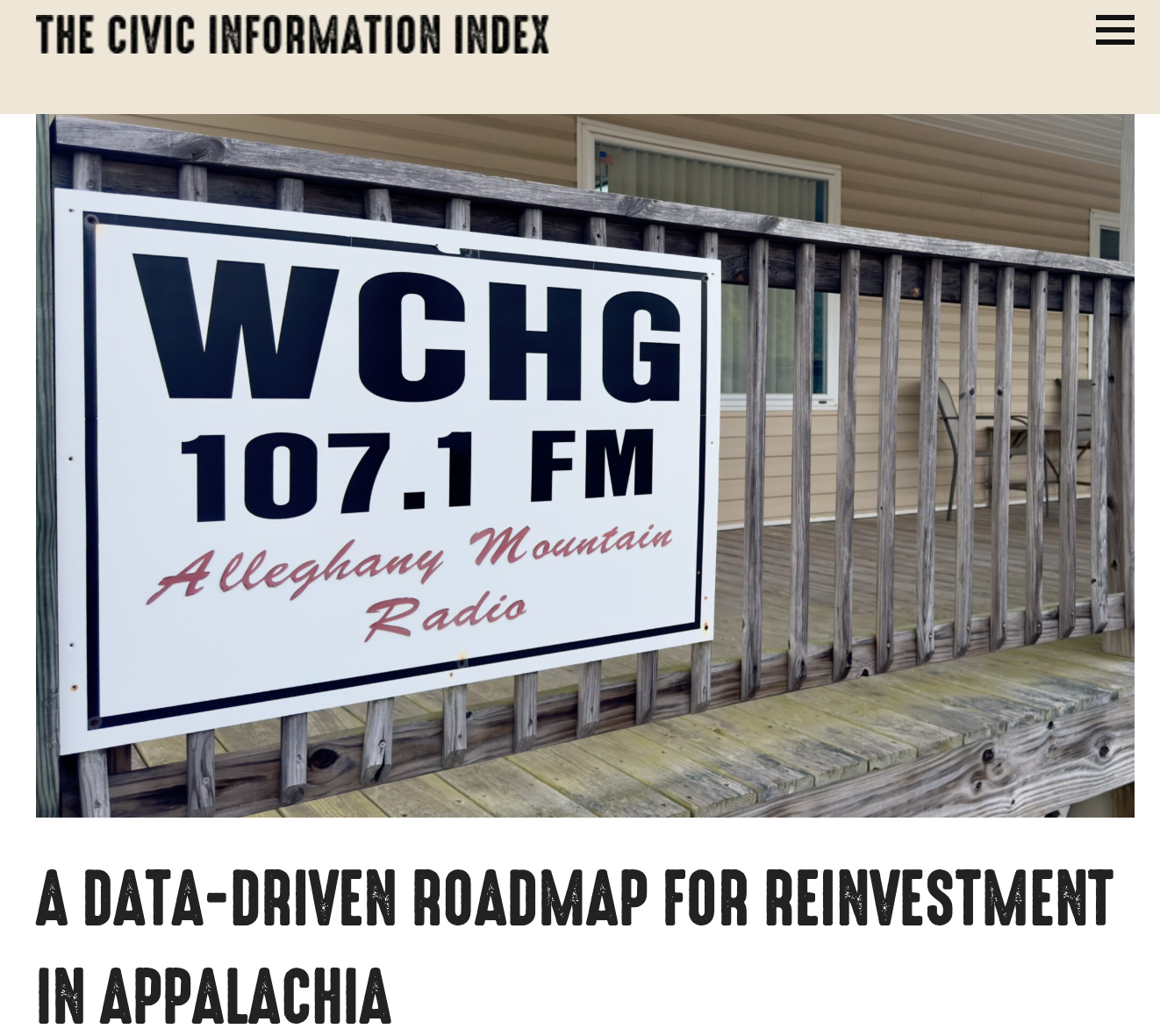
For Press Forward (PF) Central Appalachia, the challenge is clear: bringing new life to the news and information ecosystem across a vast, primarily rural region. To convince national funders to invest in an area historically overlooked, the team focused on building a powerful, data-driven case for support.
They worked to answer a critical question: How does the decline of local news impact the well-being of a community, and what is the real-world return on investing in it? This is where their comprehensive research, “The State of the News Business in Central Appalachia – Models for Reinvestement” came into play, with the Civic Information Index (CII) serving as a foundational analytical tool. We sat down with the Press Forward Central Appalachia research team to understand their process.
|
|
|
|
One challenge Appalachian funders have faced post-Helene is having a place to visualize and collect data related to the hurricane. Funders wanted answers to questions like which areas were hit hardest, and where the government stepped in versus where it did not. That’s why the Appalachia Funders Network (AFN) is launching the Appalachian Helene Impact Explorer tool, which compiles datasets and maps to highlight where
philanthropic dollars can make the biggest difference in the region.
|
|
|
Other News That Caught Our Eye |
|
|
Our Contact Informationno-cont *{{Organization Address}}* admin@appalachiafunders.org
*{{Unsubscribe}}*
| | |
|
|