
What’s Good in Appalachia? Telling the Story of Goblins in Eastern Kentucky
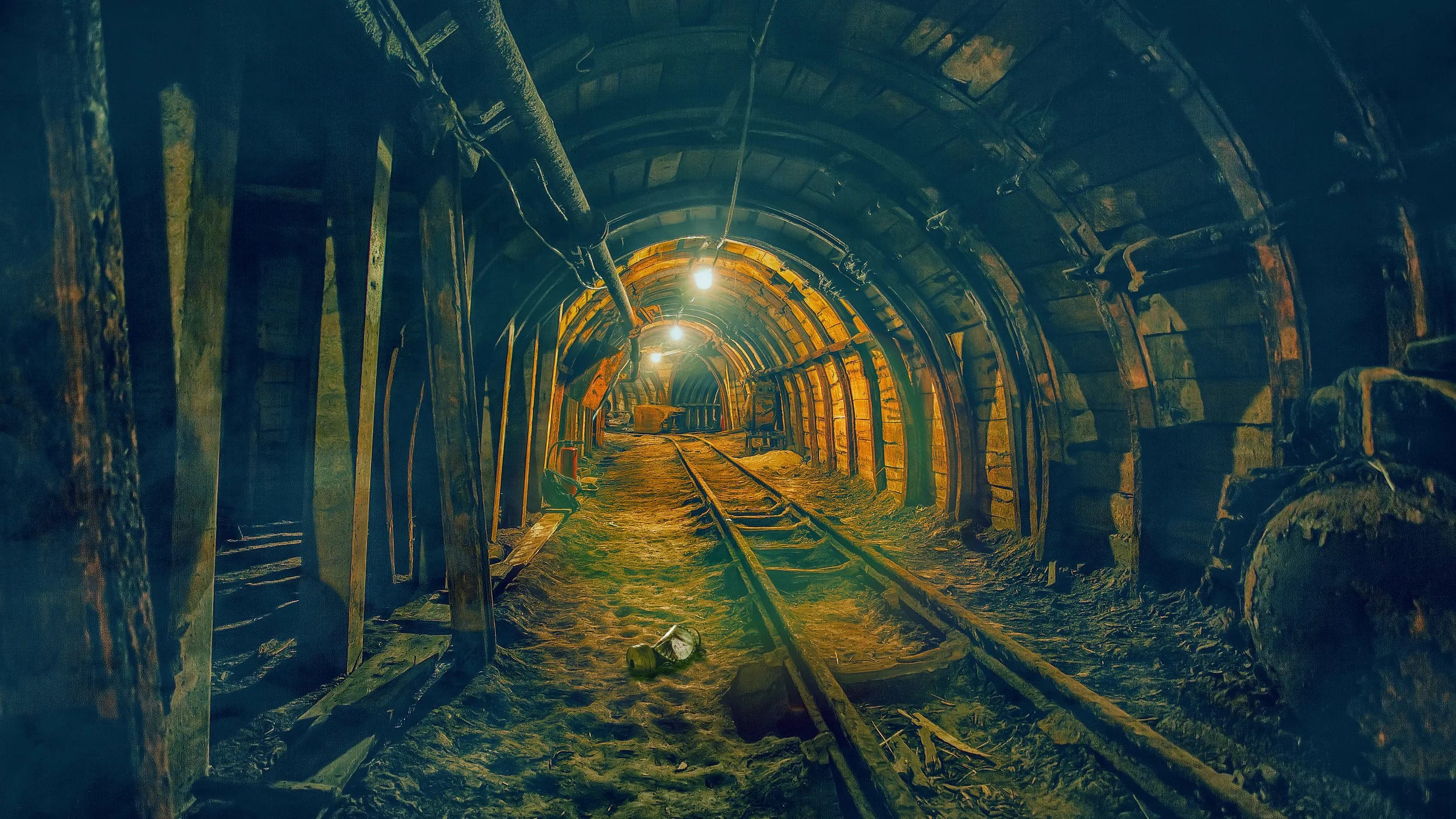
Credit: Maxim
In 2022, floodwaters tore through Eastern Kentucky, in the heart of coal country. As the rivers began to return to their banks, folks emerged from their homes to take stock of the damage, check on family, and care for their community. A community that, as it turns out, might include goblins.
Lora Smith is writer and the interim co-executive director of Justice Funders. At the time of the flood, she was working at the Foundation for Appalachian Kentucky in Hazard, which became a hub for recovery. Smith and her colleagues dispatched throughout the county, shoveling mud, delivering water, and supporting neighbors in shared grief.
A lot of that work, Smith said in an essay published in the Oxford American, was just listening to folks’ stories. Stories about what they lost, what they needed, and what they saw.
It’s what they saw, she said, that began to get strange. As the weeks went on, she heard more and more stories about goblins — short, pointy eared, not-quite-human, creatures with grayish skin — appearing throughout the region.
After a period of obsession and investigation, Smith filed the stories away in her memory for a couple years. Then, after beginning a MFA in Creative Writing, she found herself picking it up again. The essay, Gobsmacked! Supernatural Sightings After a Flood, went viral when it was published in 2025, gaining national attention. The momentum has continued, and the public radio podcast Spooked made the story the first episode of their 2026 season. Appalachia Funders Network’s Narrative & Communications Coordinator Chelsea Naughton spoke with Smith about how she navigated telling this story, and how folklore, cryptids, and the supernatural fit into a larger narrative ecosystem.
C: The first version of this story was published in the Oxford American. What were you keeping in mind as you wrote this, especially knowing that an audience who's not familiar with Appalachia or is from outside of Appalachia would be taking it in?
L: As a person from Southeastern Kentucky and a writer, I think I’m always very concerned about offering an accurate portrayal of the region that might butt up against stereotypes that national media perpetuates about the region, right? I always want to show communities as I've experienced them. These are communities filled with incredibly brilliant people who are working on community solutions that the rest of the country could learn from. They’re not people who should be dismissed by all the awful stereotypes that have existed about the region since the turn of the last century and largely been constructed by people from outside of the region who had their own agendas for the region, right? So I always try to enter with a sensitivity to do the best representation that I can of the places and people that I'm writing about.
C: The story is, of course, cryptid-related, and the folklore around the region can sometimes get twisted and folded into stereotypes about Appalachia. What sensitivities and thoughts did you put into that particular part of it?
L: I'm not a person who was into cryptids. I know about Mothman and all of these things, you know, having grown up and been around the region. They have these beloved local followings and are kind of a fun part of pop culture in the region.
There's kind of been such a resurgence of interest, including inside the region, about these cryptids. It's been fun to watch that and to think about what all this means culturally, in the cultural moment, the political moment, the economic moment that we're in. Why do these things have resurgences sometimes, and what does that mean?
So I was definitely thinking about it in that way and not wanting to lend to a stereotype. I'm sure you've seen the TikToks and the Instagram posts about Appalachian folklore and how it's a scary haunted place, or it's a magical place or mysterious place where tourists come and it’s voyeuristic. I didn’t want to add to that, but also wanted to be true to the stories and the people that I interviewed who had these fantastical experiences and we're trying to make sense of them.
“...The future isn’t written. We don’t have all the stories that we need. Like, maybe this is a story we needed in that moment, and there are still new stories to be written about the region.”
C: What was it about the Snap Judgment and Spooked team that made you feel confident that they were going to steward the story well?
L: Yeah, so it was really surprising to me that the article went viral. It was the most read article in the Oxford American in 2025. I thought it was going to be this one-off story and it was fun to publish, and that would be it. But all of the sudden I was getting all of these like solicitations asking ‘would you be interviewed with us? Would you talk about this?’ I turned down a lot for a number of reasons and just wasn't interested.
Then I got contacted by the producers of Spooked, which is produced in San Francisco by the producers of Snap Judgment. I'd never heard of it, didn't know what it was, so I wasn't going to respond to them either. But a friend of mine encouraged me to and directed me to a couple of episodes. One of them was really beautiful. It took place in Cajun country in Louisiana and was dealing with aspects of Cajon culture to tell the story. It was the kind of story that had you in tears at the end, and it handled both culture and the story and the people being interviewed with such love and care. So I was like, okay, I might do this.
the future isn't written. We don’t have all the stories that we need. Like, maybe this is a story we needed in that moment, and there are still new stories to be written about the region.
C: What has the reception to the story and the episode been like?
L: I will say, all of the comments that I've seen online have been really loving towards Appalachia and Eastern Kentucky. People seem to be really connecting with the people, saying how touched they were, naming some of the people interviewed in the piece of to say they were awesome, and how their hearts go out to these communities
Sometimes when there are floods, stories come out almost suggesting that people deserve it for living here, or they should move or know better — really nasty stuff. And there's been nothing like that. It's been really supportive, with people connecting on a human level.
C: You spoke with Matthew R. Sparks, a local folklorist and author in your piece. He explained that often folklore emerges out of trauma and conflict and disaster. Those are things that Appalachia is not a stranger to, and we also have a lot of folklore and cryptids. Can you expand on some of the ideas you started to explore in the article around the role of folklore in self conceptualization?
L: I think what Matthew was starting to explore is why that is what it means. It can be a way to create a narrative structure or a narrative vessel that can hold things like grief, that can hold the unexplainable, the trauma that a community goes through when there's a tragedy. One of the stories he shared with me was about a mine disaster in Leslie County, and after that people would report seeing miners along the road who were walking home with their lunchbox, but they ended up being ghosts. We've always had those kinds of ghost stories. When I started looking into cryptid stories, there is often this connection to a very hyper-local tragedy happening. Like with Mothman, for example. That one has a connection to a tragic bus accident in West Virginia.
The goblin story is kind of a new one. It's connected to old stories about Tommy Knockers, but it's a newer version of that. But why now? Why during the flood? What does this mean? What could it mean? For me, as a writer, there's always new things to discover about place, about human experience. And to me, there is a hopeful quality of that, that the future isn't written. We don’t have all the stories that we need. Like, maybe this is a story we needed in that moment, and there are still new stories to be written about the region.
So much of the stories told about Appalachia are backwards looking. You know, these frameworks like the book Yesterday's People, they frame this as a place that's backwards, that lives in the past. But this is also a place that's very much in the present and is going to have a future. It's constantly evolving and changing and it's not, has never been static. People are figuring out what Appalachia is today and what it's going to be in the future.
And, you know, a lot of AFN members are working on those very issues around what the future is and what kind of future we want to build. So for me, new stories that emerge like this that are filled with awe and wonder are an opening to new stories that could be told about the region.
C: In both the article and in the Spooked piece, you were very careful not to claim to know what the phenomenon of these goblins is, and I appreciate that. If you had to say what the goblins are or what they mean to you right now, what would your answer be?
Lora What they mean to me right now is it's been a fascinating story to be a part of and to get to tell because it has fostered a lot of human connection. When I was working on this piece, I had the opportunity to take a national writing residency and was sent to California for a week to just be in a cabin in the middle of Joshua Tree National Forest and write the story.
As I met people they would ask me what I was working on. I'd tell them and they were just like, ‘oh my gosh, that's amazing!’ It opened up this almost childlike awe and wonder, and then they started telling me their own stories of unexplained experiences. And so it just became this fun storytelling, but it was also something deeply human where it's someone saying, ‘something happened that I can't explain, and I'm trusting you that you're not going to think I'm crazy. And we're gonna just kind of sit in this wonder together of the unexplained and of like, wow, like humans don't have all the answers. We don't really know what's going on.’
There are still things that we can't explain. There are still things to discover and there's still a need for curiosity. If we think that we have it all figured out, what are we doing here, right?
C: What is your definition of a just transition for Appalachia?
“With storytelling and narrative work and folklore, those things are rooted in imagination first. In order to build the world that we want to live in, we first have to imagine what it looks like, right? And then we have to believe in that vision and figure out the strategies to get us there.”
L: I use a definition of Just Transition developed by two movement groups I work closely with in my role at Justice Funders, Climate Justice Alliance and Movement Generation. Just Transition is a place-based set of people powered principles, processes, and practices that build economic and political power for working class people to shift from an extractive economy to a regenerative economy that centers caretaking of people and the natural world. It’s always important to me to note where the Just Transition movement comes from, because there have been things written about Appalachian movements for a Just Transition that fundamentally misrepresent this framework as arising from white-led nonprofits in Appalachia or that it is a framework that only applies to the energy sector. In reality, the Just Transition movement is a global one that arose from alliances built between Black, Indigenous, and people of color led grassroots movement., organized labor, and environmental grassroots movements.
I write about this and the role regional philanthropy played in some cases in propagating this origin myth in my chapter in the book, “Towards Just Transitions: Visions for Regenerative Communities in Appalachia.” The Just Transition framework can be applied to every sector and system including philanthropy. The movement for a Just Transition connects Appalachia to communities across the globe from Indigenous communities in the Amazon fighting for self-determination to the worker owned Mondragon cooperatives in Spain- and that’s important to not lose site of because it offers real opportunities for Appalachians to build solidarity and power across borders.
C: What would be an indicator in your life that we have made significant steps towards a justly transitioned economy in our region?
Lora Well, number one we wouldn't have poverty in the region anymore. People would be making not just a living wage, but a much better quality of life would have self-determination over their life and sovereignty and autonomy. Appalachian people would be listened to, both in their local governments, state governments, and federal governments, and have a voice in what's happening in their communities. We would have many more businesses that were worker led, we'd have more innovative forms of business and ways of living together than what we have now. People would be taken care of.
C: What's the role of storytelling and folklore in our work toward that just transition?
Lora With storytelling and narrative work and folklore, those things are rooted in imagination first. In order to build the world that we want to live in, we first have to imagine what it looks like, right? And then we have to believe in that vision and figure out the strategies to get us there. So for me, it’s very much rooted in having what at Justice Funders we call ‘practicing untethered imagination.’ Not just looking at what we have and how maybe we can reform it to be the best that it can be. No, we could actually create something entirely new. I think all of that starts in story.
And, specifically to your question about folklore, whenI think about folk traditions and stories and even traditional knowledge or ancestral technologies … when I think about folk traditions, folk stories that exist within communities … what profound form of local community knowledge and expertise, right? And so a lot of those things are born out of observation. What folklore and local storytelling helps us communicate is local wisdom, local observation … local ways of knowing what's happening now and what has happened in the past in our communities, and also what could happen when we root that in imagination to help us create the world that we wanna live in.