|
|
The Coordinator will report to the Programs and Learning Manager and work closely with the full AFN team, members, and partners. This is an ideal role for a professional who is both strategic and execution-oriented—someone who can manage communications systems while also understanding the deeper role narrative plays in shaping investment, policy, and place-based change.
|
|
|
|
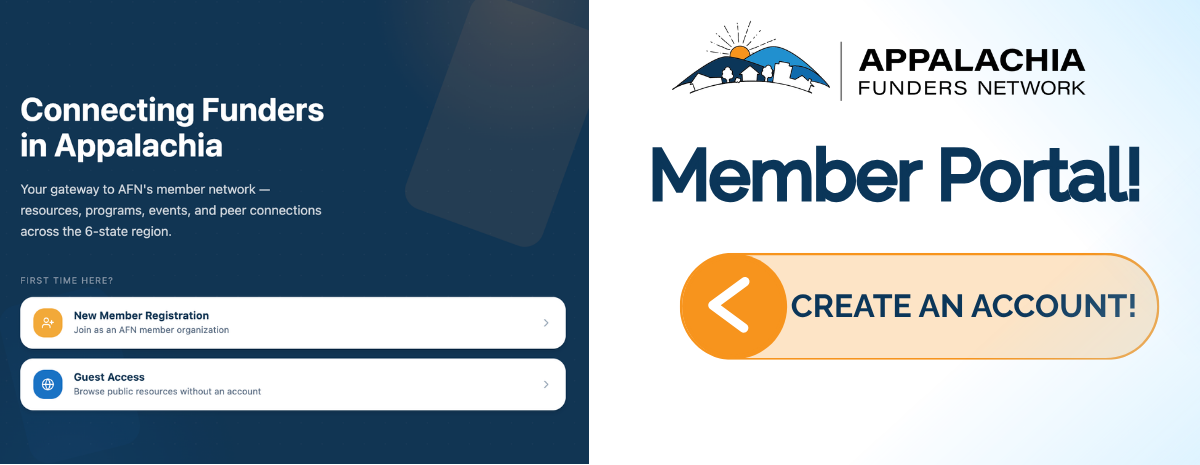
AFN has officially launched its new Member Portal—a long-awaited, shared space designed to make it easier for members to securely connect, engage, and access the full breadth of the Network. You can read about the portal's functions and how to register here.
|
Getting started is simple: members can either register a new organization or join one that has already been created. Once you submit your registration, AFN staff will review and approve your account. After that, you’ll receive a confirmation link and can bookmark portal.appalachiafunders.org for easy access moving forward.
To help members get the most out of the portal, we’ll be hosting a New Member Orientation on May 19, with a walkthrough of key features and time for questions. All members—new and longtime—are welcome. You can register here.
If you run into any questions or hiccups along the way, don’t hesitate to reach out at kalista@appalachiafunders.org—we’re happy to help.
An important note: All members will need to register for the portal by June 1 to register for programs and access their materials.
|
|
|
|
Ready to get involved? Click the buttons below to register for one of our upcoming programs or submit your ideas for future offerings.
|
→ Communities of Practice: Ongoing, member-only, and practice-based peer-learning circles.
Existing or upcoming Communities of Practice are:
|
→Learning Journeys: Time-bound, cohort-based learning experiences on a focused topic.
Existing or upcoming Learning Journeys are:
- The Art of Everyday Civics | Every last Wednesday of the month at 1 PM
- Funding for the Moment We’re In | In Development
- Appalachia 101 | In Development
-
Blended Capital and Impact Investing 101 | Continues Summer 2026
*following the Pre-Gathering on Impact Investing, Learners are invited to continue this opportunity with continued sessions. While many of you were with us at Mission Investors Exchange, our team will be in touch very soon with the cadence for continued meetings. If you were not able to join our Pre-Gathering as a Learner, but would like to jump in now, please contact jess@appalachiafunders.org.
|
→Action Teams: Collaborative, action oriented formations focused on producing concrete outcomes (like a playbook, new fund, or solutions to regional challenges).
Existing or upcoming Action Teams are:
- Rural News Fund | Ongoing
- Appalachian Helene Fund | Ongoing
- Appalachian Capital Lab Active Investors | Launched at April AFN Gathering, click below to join.
Watch the recording of our rollout or explore our refreshed programs webpage for more info.
|
|
|
|
Question for the Network: Costs of Convening
|
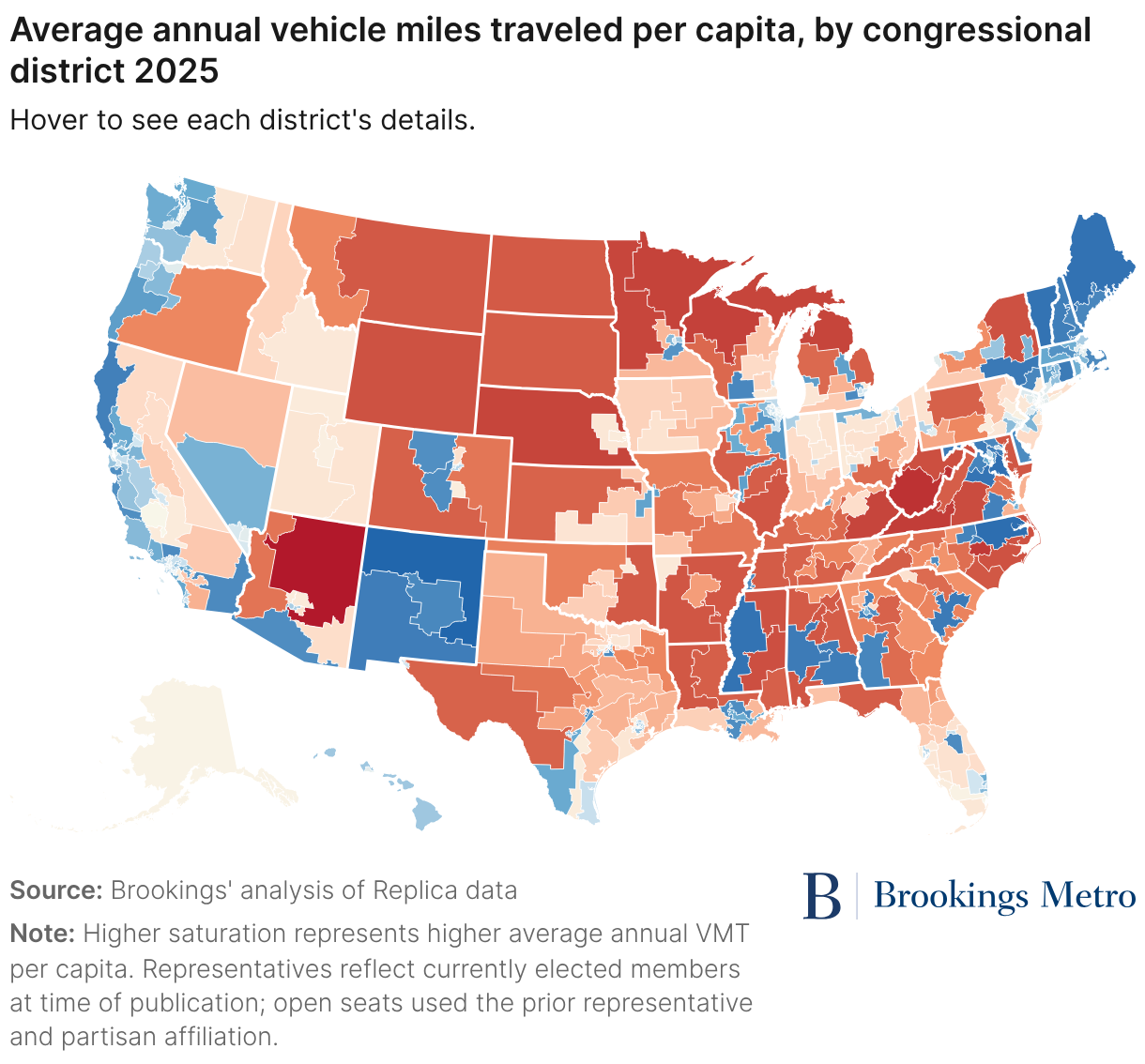
Rising travel and fuel costs are increasingly shaping how we convene, commute, and participate in person. Over the course of the past year, the gasoline index has increased by 28.4%, with national gas prices climbing above $4.50 per gallon in many parts of the country - the highest levels seen in over four years and no end to the increase in sight.
|
|
|
|
|
For rural regions like Appalachia, where long-distance travel is often unavoidable for daily life, these costs hit especially hard. Research from the U.S. Department of Transportation found that only 36% of rural residents live within reach of airline, rail, and bus transportation options, while additional Brookings Institute research shows that rural regions face higher transportation burdens because of geographic distance and limited transit infrastructure.
With the cost of travel increasing with no end in sight, some organizations are making changes to ease the cost of working and convening. The Foundation for Appalachian Kentucky, for example, recently shifted recurring all-team Tuesday meetings to remote formats to reduce travel strain and operational costs. The Greater Clark Foundation incorporates travel reimbursements and stipends into cohort-based grantee convenings to help ensure participation is not limited by geography or organizational capacity. National funders, including Fidelity Charitable’s Catalyst Fund, have increasingly covered airfare, lodging, and transportation costs for grantee gatherings.
As travel becomes more expensive and logistically challenging, we’d love to hear from the Network: how are funders adapting to ensure rising travel costs are not become a barrier to participation? Are there approaches, reimbursement models, stipends, hybrid formats, or other practices your organization is practicing to help reduce the burden on smaller organizations and rural partners for in-person convenings?
|
|
|
|
Join us on the first Friday of the month for our network-wide Hurricane Helene Response Call. This is a space for sharing updates, ideas, and organizing around Helene Recovery and Community Resilience.
Use the button below to add the call to your calendar. We look forward to seeing you there!
|
AFN held its inaugural Knowledge Exchange webinar on May 14th: Leveraging the Potential of Regional Public Colleges and Universities (RPCUs) for the Future of Healthcare. The session featured leaders from East Tennessee State University, Shawnee State University, and the private healthcare sector, who shared data showing that nearly every county in Central Appalachia faces primary care and dental workforce shortages, while the region continues to experience hospital closures, provider burnout, and some of the nation’s lowest nurse-to-population ratios.
Speakers also introduced interactive county-by-county health mapping tools that allow communities to explore local data on healthcare workforce shortages, leading causes of death, respiratory disease, cancer, and other health outcomes across Appalachia. The webinar then explored how RPCUs are developing “grow-your-own” healthcare workforce strategies designed to recruit, train, and retain healthcare professionals within the region.
Missed it? AFN Members can view the webinar recording and materials in the Member Portal.
|
|
|
|
|
|
Partner Community Capital
|
Named 2026 CDFI of the Year by NC Rural Center
|
Partner Community Capital (PCAP) has been named the 2026 CDFI of the Year by the NC Rural Center, recognizing its significant impact in rural communities across the Southeast. The award was presented at the 2026 Rural Summit in Raleigh, North Carolina, and accepted by PCAP leaders Erika McGilley and Jessie Maxwell. The honor highlights PCAP’s innovative financing, technical assistance, and long-term investment in underserved areas. For over two decades, PCAP has expanded access to capital and support for small businesses, nonprofits, and community projects, helping drive economic growth and resilience in rural communities. Read more here.
|
|
|
|
|
|
$431,000 in predatory debt, gone!
|
In the year since opening their Chattanooga office, BetterFi shattered our original projection of $250,000 and disbursed $431,284, with the two largest counties represented being Hamilton County and Grundy County. This conservatively represents savings of $1,097,455 that our clients would otherwise have paid predatory lenders.
Cumulatively, BetterFi has now disbursed more than $1,155,800 – equating to savings for their clients of more than $2,962,000.
|
|
|
|
|
|
Claude Worthington Benedum Foundation
|
Awards RE-PATH $75K to the new statewide substance use recovery advocacy organization
|
Kim Tieman, Vice President and Program Director at the Claude Worthington Benedum Foundation, said RE-PATH is filling critical gaps with trained partners and volunteers in many rural areas of West Virginia where local officials are not able to provide and sustain substance use recovery strategies and tactics. “One of our foundation’s hallmarks is to level the playing field for areas of unmet need in our region,” she said. Read more about the work here.
|
|
|
|
|
|
James Graham Brown Foundation
|
Louisville program gets $1.5M boost for early childhood education
|
Alongside city leaders, he announced $1.5 million would be going toward the Thrive by Five program as a gift from the James Graham Brown Foundation.“This grant, we believe, aligns with Mr. Brown's intentions that we do things to improve the well-being of our citizens of Louisville, create pride in our city, and we look for national recognition,” said Mason Rummel, CEO and president of the James Graham Brown Foundation. “This project has all of those ingredients, and we are most proud to have played a part in it. It's a team effort, and Louisville's extraordinary ability to form public-private partnerships that impact all of us is certainly evident today."
Read more about the work here.
|
|
|
|
Network Events & Opportunities
|
|
|
|
|
|
Annual Conference on Health Philanthropy
|
The 2026 Grantmakers In Health (GIH) Annual Conference on Health Philanthropy, will be held on June 8 – 11 in Baltimore, MD, at the Hilton Baltimore Inner Harbor. This year’s theme is “life, liberty, and the pursuit of health.” Two hundred and fifty years ago America’s founders came together to say the current system of government was not working for them. This act sparked the birth of a new nation founded on principles of freedom, equality, and democracy. The document they signed clearly articulates the founders’ belief in the right to life, liberty and the pursuit of happiness. Health—and the ability to lead a healthy and productive life—is deeply intertwined with these ideals. Learn more about the event and register here.
|
|
|
|
|
|
Fahe’s 2026 Annual Meeting will bring Members, partners, funders, policymakers, and other stakeholders together from September 22 - 22 in Huntington, WV to explore what our network is learning, building, and proving through Housing Can’t Wait and our collective work across Appalachia.
This year’s theme, Learning in Motion, reflects where they are as a network. They are not simply responding to the housing challenge. They are testing strategies, adapting our work, using data, strengthening visibility, and learning together in real time.
Learn more and submit session proposals here.
|
|
|
|
|
|
Federal Reserve Bank of Richmond
|
2026 Investing in Rural America Conference
|
The Richmond Fed’s 2026 Investing in Rural America Conference is upcoming! Mark your calendars for September 30 – October 2, 2026, as they gather at the Omni Grove Park Inn in Asheville, North Carolina.
This year’s conference will showcase innovative strategies for rural prosperity across economic development, small business development, financial inclusion, workforce pathways, and more! Learn more here.
|
|
|
|
|
|
Tennessee Arts Commission
|
The Tennessee Arts Commission is currently accepting applications for the Arts Build Communities (ABC) grant program! This is your chance to get funding for projects that bring the arts to your community.
Applications are due by 7/1/2026. Learn more here.
|
|
|
|
|
|
East Tennessee Foundation
|
The East Tennessee Foundation (ETF) is announcing the opening of the 2026 Thompson Charitable Foundation Fund competitive grant cycle beginning May 4, 2026. ETF has partnered with the Thompson Charitable Foundation to create this new grant program and will award grants to organizations serving Anderson, Blount, Knox, and Scott counties. This grant program will accept applications and award funds each year for the next three years.
Learn more here.
|
|
|
|
If you have news, an opportunity, grant, or webinar you would like for AFN to share in its next newsletter, please submit it through the member portal!
|
|
|
|
What's Good in Appalachia? Mental Health Awareness Month!
|
May carries a lot of weight in Appalachia. These mountains have seen battles in May. Floods in May. Labor uprisings, loss, displacement, grief in May. It’s a month filled with milestones that hold both painful history and deep legacies of strength and organizing.
And yet even in the shadow of those histories, every year, the trees turn their greenest green again. The mountains come back to life, front porches fill up, cemeteries are decorated, gardens are planted, Dogwoods bloom and ramps emerge. People gather again and again in community, showing up for one another.
As we move through Mental Health Awareness Month, we want to acknowledge both truths at once: Appalachia’s beauty and Appalachia’s pain, and the role both play in shaping mental health.
Mental health does not exist separate from place. It is shaped by access to healthcare, economics, disasters, investment, the institutions that drive policy and structures that cause a sense of isolation. But it is also shaped by belonging, culture, purpose, storytelling, arts, third spaces, faith, and people showing up for one another.
What’s good in Appalachia is not that communities have learned how to endure hardship. It’s that in spite of hardship, people still create beauty and care for one another. That looks like people checking in on one another after disasters, food dropped off on front porches, benefit concerts, recovery groups, arts collectives, mutual aid shared across church pews, and people helping people.
Every May, these mountains remind us of our legacy of resilience, but they also bring music, storytelling, laughter, and community into full bloom - the flowers being born of the rain.
So this month, remember to take care of yourselves, one another, and this place we call home: Appalachia.
“But you cannot know a place without loving it and hating it and feeling everything in between. You cannot understand a complex people by only looking at data - something inside you has to crack to let in the light so your eyes and brain and heart can adjust properly.” - Silas House
Read more about Creating a Culture of Health in Appalachia here.
|
|
|
|
|
|
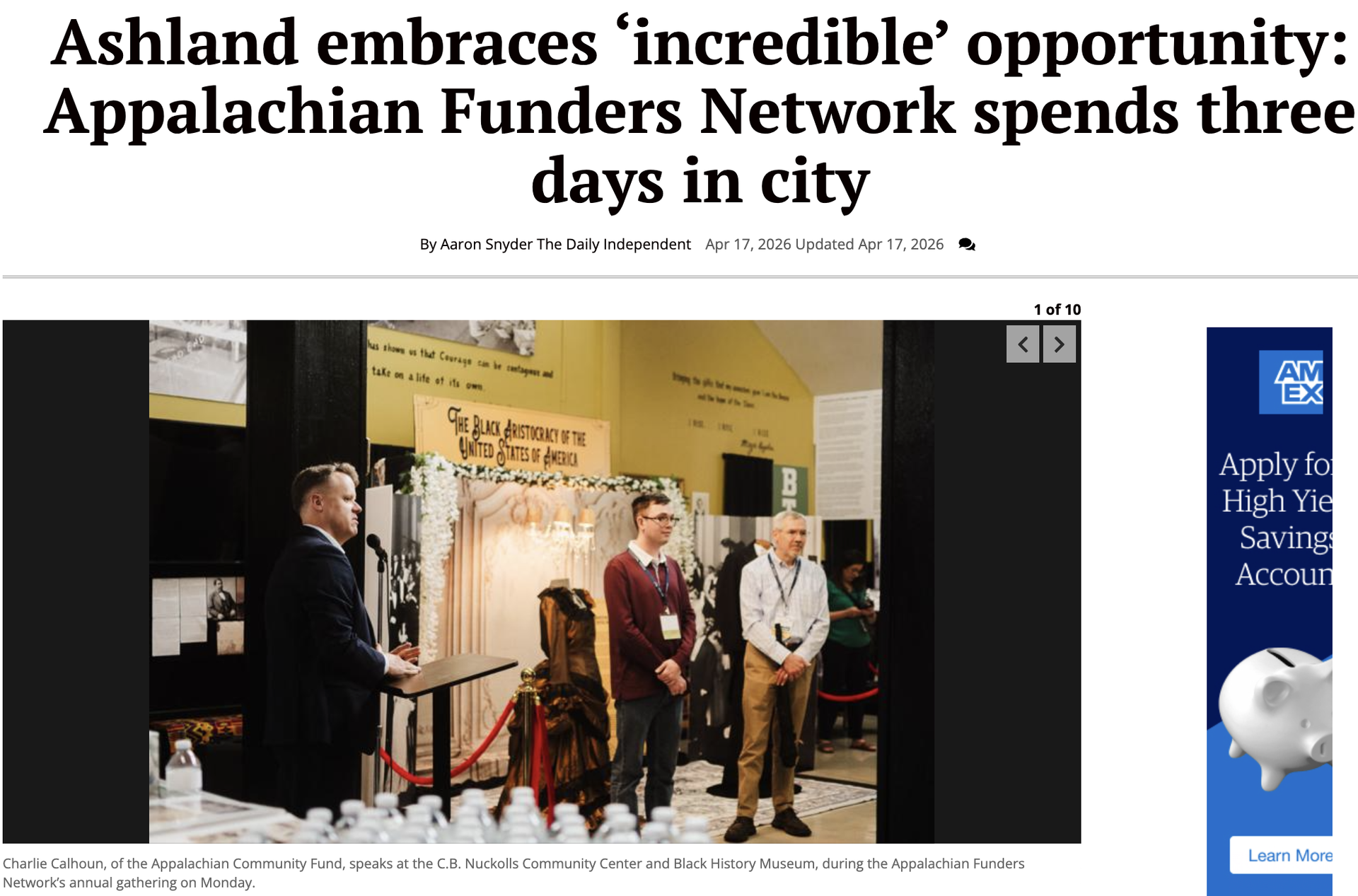
The Daily Independent | Ashland embraces 'incredible' opportunity: Appalachia Funders Network spends three days in city
“There were lots of big conversations in there,” Kouns said. “It felt more like a family reunion than anything. It was incredibly refreshing, full of people who want to see the Appalachian region grow. It was great to get together and strategize and make things better.”
|
|
|
|
|
|
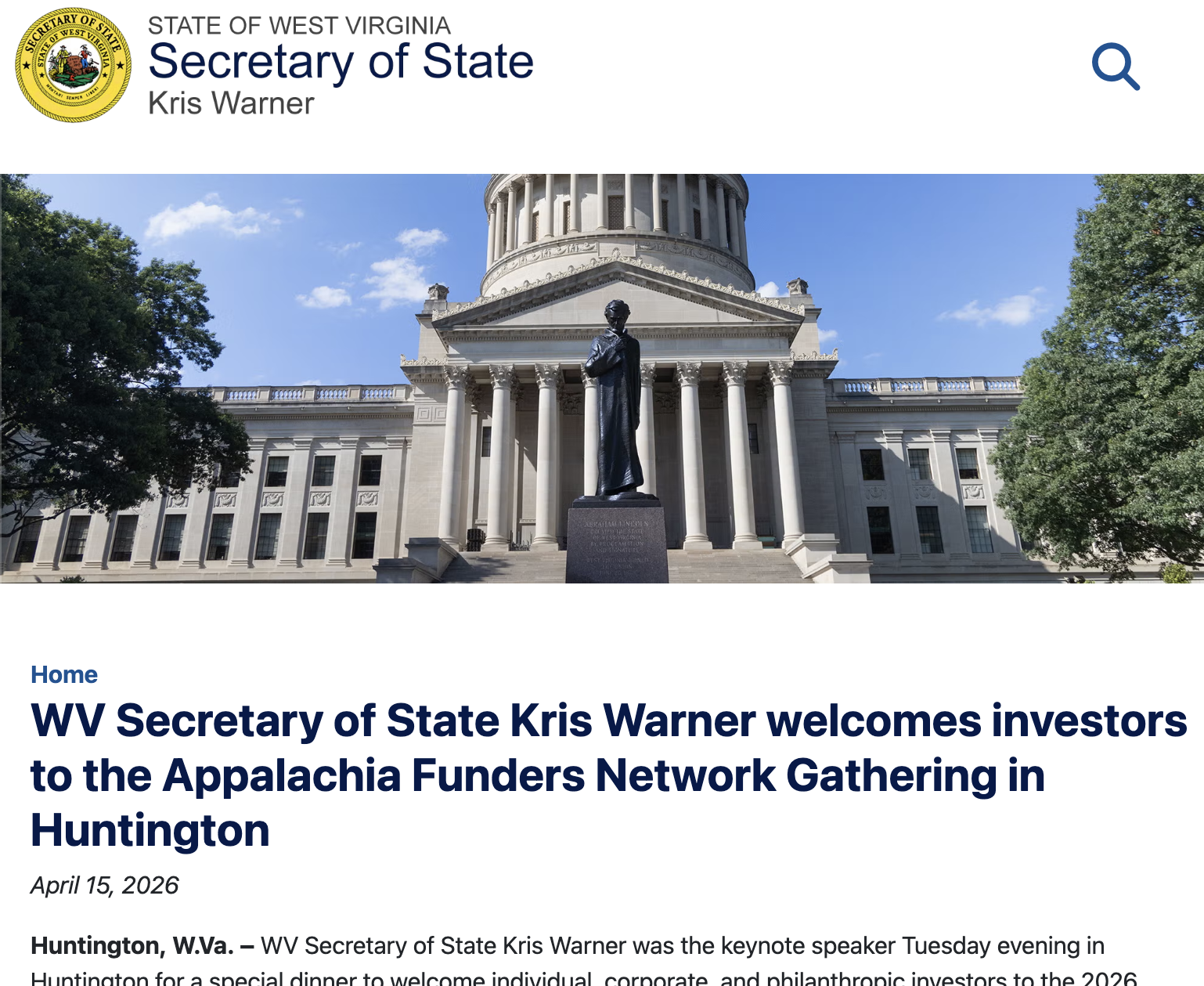
WV Secretary of State | Press Release: WV SOS Kris Warner welcomes investors to the Appalachia Funders Network Gathering in Huntington
WV Secretary of State Kris Warner was the keynote speaker Tuesday evening in Huntington for a special dinner to welcome individual, corporate, and philanthropic investors to the 2026 Appalachia Funders Network Gathering. More than 120 individuals attended the dinner hosted by Coalfield Development at the West Edge Factory in Huntington.
Read Secretary Warner’s remarks and the full release here.
|
|
|
|
|
|
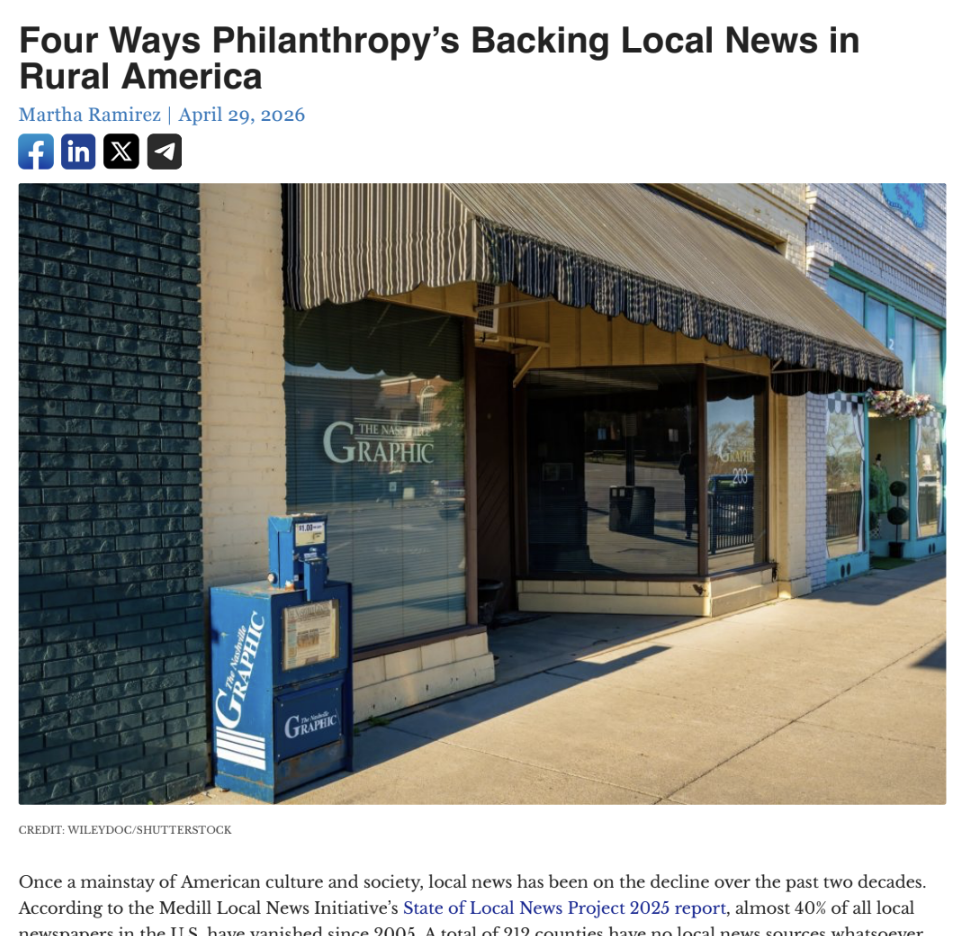
Inside Philanthropy | Four Ways Philanthropy's Backing Local News in Rural America
AFN’s Eller noted that communities suffer civically, culturally and economically when local news disappears.
Whether it’s information about new health policies and how they will impact people, reporting on emergencies
and disasters, covering school board meetings, or even writing about a children’s baseball game, local news is
essential for community wellbeing. It is also a way for communities to be able to tell their own stories and write
their own futures, rather than having others speak for them." Read the full article here.
|
|
|
|
Other News That Caught Our Eye
|
|
|
|
Our Contact Informationno-cont
*{{Organization Address}}*
admin@appalachiafunders.org
*{{Unsubscribe}}*
|
|
|
|
|
|